Most Tampa homeowners think their air conditioner’s job is to make the house cold. That’s only half the job. The other half is pulling moisture out of the air, and in a climate where the dew point sits in the 70s from May through September, that second job is often the one your system is losing.
Here’s the problem in plain terms: an AC removes humidity as a side effect of cooling, not as its main function. When outdoor humidity is extreme, or when a system is oversized and cycles off too fast, the air gets cold before it gets dry. You end up with a house that feels clammy at 74 degrees, musty closets, foggy windows, and a slight mildew smell in bathrooms that never fully clears. That’s not a broken AC. That’s a humidity problem your AC wasn’t built to solve alone.
Why Tampa Bay humidity is different from most of the country
Tampa sits at the edge of two moisture sources: the Gulf and near-daily afternoon thunderstorms from June through September. Relative humidity outside routinely runs 85-95% in the early morning and doesn’t drop much even at midday during peak summer. Indoors, without help, a typical home can sit at 55-65% relative humidity even with the AC running constantly. Mold and dust mites both thrive above 60%. Comfort experts generally target 45-50% indoors, and getting there consistently in a Tampa summer usually takes more than a correctly sized AC.
Homes in older, leakier construction feel this hardest. A lot of the housing stock in Seminole Heights, Sulphur Springs, and parts of Gulfport and Kenneth City was built before modern vapor barrier and duct-sealing standards existed, so humid outside air infiltrates through the attic, the duct chases, and around older windows faster than the AC can pull it back out.
What a whole-home dehumidifier actually does
A whole-home unit ties directly into your ductwork, usually near the air handler, and runs independently of the AC’s cooling cycle. That’s the key difference from a portable unit: it can pull moisture out of the air even when the thermostat isn’t calling for cold air, which matters a lot in spring and fall when Tampa is warm and sticky but not hot enough to run the AC constantly.
A correctly sized whole-home unit can pull 90-150 pints of water a day out of a typical Tampa Bay home, depending on square footage and how leaky the envelope is. That’s enough to bring a home from the high 50s down into the mid-40s for relative humidity, which is the range where mold growth slows dramatically and the air actually feels comfortable at a higher thermostat setting. Some homeowners raise their thermostat two or three degrees after installing one and still feel cooler, because dry air at 76 feels better than damp air at 73.
When it’s worth the investment
Not every Tampa home needs one. Here’s the honest breakdown:
You’re a strong candidate if:
- Your home has visible condensation on windows or AC ducts, especially in the morning
- You’ve had recurring musty smell or minor mold in bathrooms, closets, or the garage
- Your AC runs constantly in summer but the house still feels sticky
- You have hardwood floors, instruments, or anything else sensitive to moisture swings
- You live in an older home in Seminole Heights, Tampa Heights, or similar pre-1980s construction with original ductwork
You probably don’t need one if:
- Your home is newer construction with tight envelope sealing and a properly sized AC
- You’ve never noticed humidity complaints and your AC keeps the house comfortable
- Your indoor humidity, if you’ve checked it with a cheap hygrometer, stays under 55%
A quick way to check before spending anything: buy a $15 hygrometer, put it in a central room, and watch it for a week. If it’s consistently reading above 55-60%, that’s your answer.
Cost and what affects it
Installed whole-home dehumidifiers for a typical Tampa Bay home run $1,800-$4,500, depending on unit capacity, ductwork access, and whether your existing system needs modification to tie in the new unit. Larger homes or homes with limited attic access on the higher end. This is separate from routine hvac maintenance costs, though pairing the two makes sense since a technician working on your ductwork for one job can usually assess the other at the same visit.
Before committing, it’s worth having a technician who specializes in indoor air quality walk the house first. Sometimes the fix is smaller than a whole-home unit: sealing duct leaks in the attic, adding a return vent to a room that’s starving for airflow, or correcting a system that’s oversized and short-cycling. A whole-home dehumidifier is the right tool when the humidity problem is structural to the climate, not when it’s a symptom of something else that’s cheaper to fix.
What installation actually involves
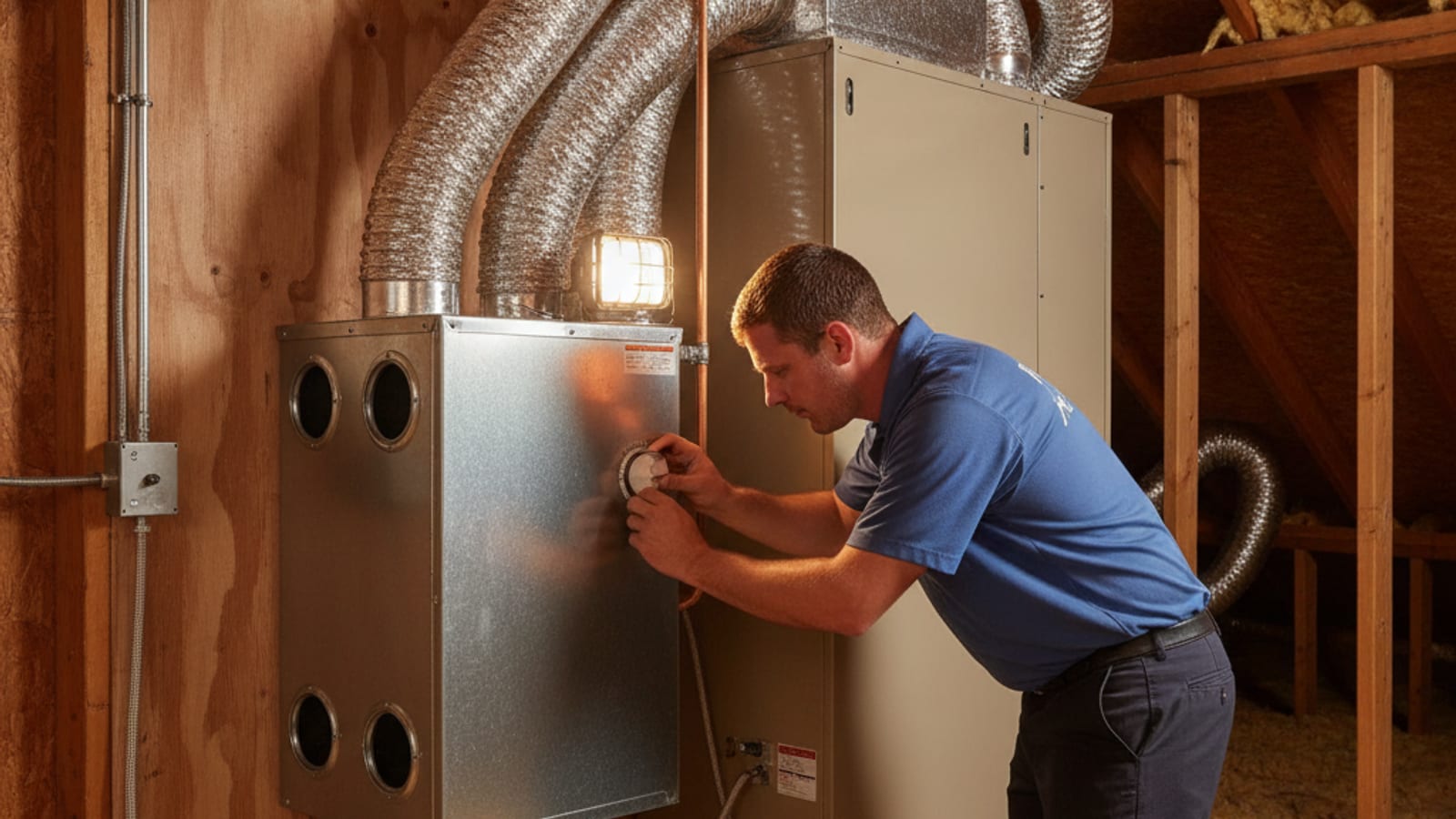
The unit itself typically mounts in the attic or a mechanical closet near your existing air handler. A technician ties it into your supply and return ductwork, runs a condensate line (usually shared with or parallel to your AC’s existing drain), and wires in a humidistat control, separate from your thermostat, that lets you set a target humidity level independent of temperature. Most installs take a full day. There’s no structural work involved for the vast majority of homes, though attic access in older Ybor City or Hyde Park bungalows with tight roof lines can add time.
Maintenance after it’s in
A whole-home dehumidifier needs a filter change every 3-6 months and an annual inspection of the coil and drain line, similar to AC maintenance. Left unchecked, the condensate drain can clog with algae growth the same way an AC drain line can, which causes water backup rather than the dehumidifier actually failing. Most Tampa Bay HVAC companies fold this into a standard seasonal maintenance visit rather than treating it as a separate service call.
How a whole-home unit compares to running a portable dehumidifier in every room
Some homeowners try to solve whole-house humidity with two or three portable units moved between rooms. It’s a reasonable instinct, but it usually falls short in practice. Portable units only treat the room they’re sitting in, they need a bucket emptied every day or a hose run to a drain, and their combined electricity draw running around the clock often costs close to what a single whole-home unit uses while covering far less square footage. A whole-home system also runs quietly out of sight in the attic or a mechanical closet, instead of adding noise and floor clutter to a bedroom or living room. For a small apartment or a single problem room, a portable unit can make sense as a stopgap. For a full house with a persistent humidity problem, it rarely holds up as a long-term fix.
How this interacts with your AC’s own dehumidification
Installing a whole-home dehumidifier doesn’t mean your AC stops doing any of the moisture removal work. The two systems typically coordinate through the humidistat control, with the dehumidifier stepping in specifically during the shoulder seasons and overnight hours when the AC isn’t running enough to keep humidity in check on its own. During peak summer, when the AC is already running long cycles, the dehumidifier’s workload naturally drops since the AC is already pulling out a lot of moisture as a byproduct of cooling. This is part of why the combination tends to use less total energy than most homeowners expect: the two systems aren’t duplicating effort, they’re covering for each other’s weak points.
How long does a whole-home dehumidifier last?
Most units are rated for 8-12 years of service with regular filter changes and an annual coil check, similar to the lifespan expectations for a residential AC condenser. Coastal homes and homes that run the unit near-continuously may see that range shorten slightly given the added run-hours typical of Tampa Bay’s climate.
Will a whole-home dehumidifier lower my AC’s workload?
Often, yes. Once indoor air is drier, your AC doesn’t have to overcool the space trying to compensate for humidity the compressor wasn’t designed to fully remove on its own. Some homeowners see a modest drop in AC run-time after installation, though the dehumidifier itself adds its own electricity draw, so total household energy use depends on the specific setup.
Can I add a whole-home dehumidifier to an existing AC system without replacing anything?
In most cases, yes. The dehumidifier ties into your existing ductwork alongside the current AC rather than replacing any part of it. The main requirement is reasonable attic or mechanical closet access for the installation and a place to run the separate condensate line.
The bottom line for Tampa Bay homeowners
If your house feels damp even when it’s cold, that’s a humidity problem, not a temperature problem, and no amount of AC tweaking fixes it by itself. A whole-home dehumidifier solves it directly instead of forcing your AC to overcool the house trying to compensate. It’s not a purchase every home needs, but for older housing stock and anyone dealing with a persistent musty smell or visible condensation, it’s often the cheapest permanent fix available.
If you’re not sure which category you’re in, that’s a fair question to bring to a technician rather than guess. Call (813) 000-0000 and we’ll connect you with an experienced local pro who can check your home’s humidity levels and tell you honestly whether a whole-home unit makes sense or whether a smaller fix solves it.