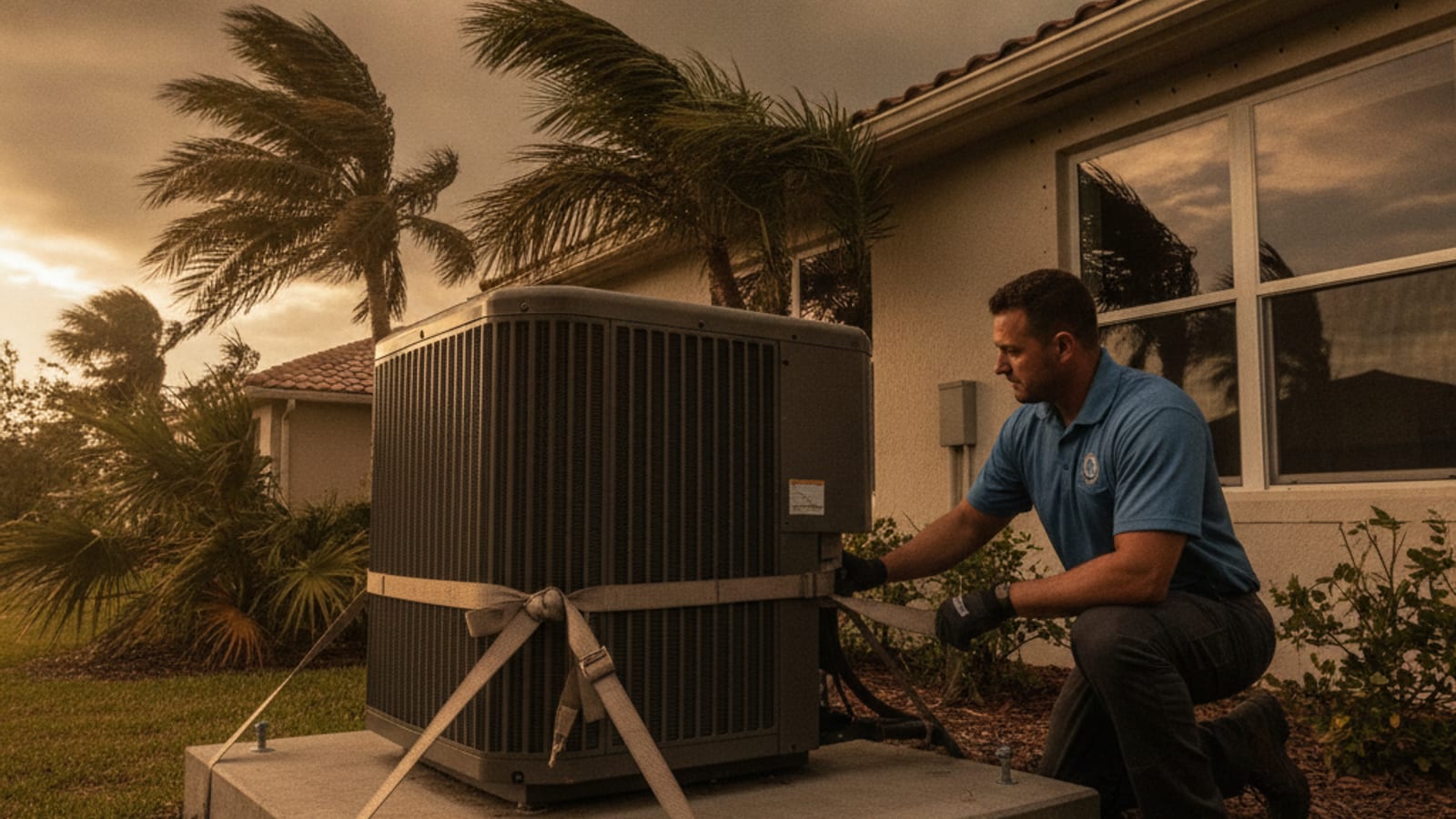
Hurricane season in Tampa Bay runs June through November, which means it overlaps with almost the entire stretch of the year when your AC is working hardest. Losing cooling during a storm isn’t just inconvenient. It’s a real problem when a power outage stretches for days in the same heat and humidity that made you need the AC in the first place. Here’s what actually protects your system, and what to do before, during, and after a storm rolls through.
The two real threats: flooding and wind damage
Most storm damage to AC systems falls into one of two categories, and they require different kinds of protection.
Wind and debris. High wind during even a moderate tropical storm can bend condenser fins, drive debris into the coil, and loosen roof flashing or vent covers where ductwork ties in. A condenser that takes a direct hit from flying debris can lose enough fin surface area to cool properly even if the compressor itself never fails, which is why a visual check after any named storm matters even when the unit still seems to be running.
Flooding and water intrusion. Outdoor condenser units sit at ground level, which puts them directly in the path of storm surge in coastal areas and standing water from heavy rainfall anywhere in Tampa Bay. Areas prone to street flooding during heavy rain events, including low-lying parts of South Tampa, Temple Terrace, and sections near the Hillsborough River, see this risk every hurricane season regardless of whether a storm makes direct landfall nearby.
Before a storm: what actually helps
Clear gutters and drainage near the unit. Clogged gutters and downspouts that dump water right next to the condenser pad add to the flooding risk during a heavy storm. Clearing them before hurricane season, and confirming the ground around the pad drains away from the unit rather than toward it, is a simple step that’s easy to skip until it matters.
Elevate what you can. If your condenser sits on a pad that’s low relative to the surrounding grade, or in an area known to pool water during heavy rain, raising it onto a taller stand or block pad reduces flood exposure. This is worth discussing with a technician if you’ve had any water reach the base of the unit during past storms, even if it didn’t cause obvious damage at the time.
Secure loose debris nearby. Patio furniture, potted plants, and anything else that can become a projectile in high wind should be stored well before a storm arrives. A condenser fan and coil can take real damage from flying debris during even a moderate tropical storm, let alone a hurricane.
Trim overhanging branches. Trees near the outdoor unit that could drop limbs in high wind are worth trimming back before hurricane season peaks, typically August through October for the Tampa Bay area.
Have a technician’s number ready before you need it. The week after a major storm is the worst time to be searching for HVAC help, since demand spikes across the entire region at once. Knowing who to call, and having realistic expectations about response times during a widespread event, makes the aftermath less stressful.
If a storm is imminent
If a hurricane watch or warning is in effect for the Tampa Bay area, shutting off power to the AC system at the breaker before the storm hits is a reasonable precaution, particularly if you’re also losing power anyway or evacuating. It protects the system’s electronics from the power fluctuations that come with a storm knocking the grid around, and it’s one less thing to think about once things get bad outside. Once the storm has passed and power is confirmed stable, restoring power to the system is safe.
After the storm: what to check before you turn it back on
Don’t assume a system that looks fine from the outside is fine. A few things worth checking before running the AC after a significant storm:
Look at the outdoor unit for visible damage: bent fins, debris lodged in the coil, or standing water still surrounding the base. If the unit was submerged at any point, even briefly, it needs a professional inspection before being powered back on. Water intrusion into electrical components isn’t always visible from the outside, and running a system with compromised electrical parts is a real safety risk.
If the power flickered or went out and came back multiple times during the storm, treat the system as a candidate for storm-related electrical damage even if it seems to be running fine. A damaged control board sometimes causes intermittent, hard-to-diagnose problems rather than an obvious total failure, and catching it early prevents a bigger breakdown a few weeks later.
If your AC won’t turn on at all after the storm, or is running but not cooling, that’s the point to call for emergency HVAC service rather than troubleshooting it yourself, especially if there’s any chance water reached the electrical components.
Extended outages and heat safety
Tampa Bay summers make extended power outages genuinely dangerous, not just uncomfortable. If you’re without power and AC for more than a day or two after a storm, check on elderly neighbors and anyone without reliable transportation to a cooling center. Humidity climbs fast indoors with no cooling running, and a closed-up house can start smelling musty within a day or two even before any water damage is involved, which is worth knowing when you’re deciding whether to leave windows cracked or keep the house sealed while you wait for power to come back.
Insurance considerations worth knowing before a storm
Most homeowners insurance policies in Florida cover storm damage to HVAC equipment, but the specifics, including whether flood damage to a ground-level condenser falls under the standard policy or requires separate flood insurance, vary by policy and insurer. It’s worth reviewing your coverage before hurricane season rather than during the scramble afterward, and our guide to whether homeowners insurance covers AC replacement in Florida walks through the deductible and the one-year notice deadline that decide most of these claims. If your AC system does sustain storm damage, document it thoroughly with photos before any cleanup or repair work begins, including the state of standing water if flooding was involved, since that documentation matters for any claim you file.
Keep records of your system’s age, model information, and any recent service history in a place you can access even if you evacuate or lose power for an extended stretch. Having that information ready speeds up both insurance claims and repair estimates if the system does need attention after a storm.
Humidity and mold risk during an extended outage
A Tampa Bay house with no AC running for several days in summer heat isn’t just uncomfortable, it’s a setup for mold growth. Indoor humidity climbs fast once cooling stops, and closets, bathrooms, and anywhere air doesn’t circulate well are usually the first places it shows up. If your outage runs more than two or three days, check those spots once power’s back, since catching early mold growth is a lot easier than dealing with it after it’s spread through drywall or fabric. When the system does come back on after an extended outage, expect it to run hard and long for the first day or two catching up on both temperature and humidity that built up while it was off. That’s normal and not a sign anything’s wrong with the equipment, as long as it’s making steady progress and not just running constantly with no change in how the house feels.
Building storm resilience into your system
If your AC system is aging and due for replacement anyway, hurricane season is a reasonable time to factor storm resilience into that decision, including pad elevation if your property has flood exposure and equipment placement that limits exposure to wind-driven debris. It’s easier and cheaper to build that in during a planned replacement than to retrofit it after a storm has already caused damage.
We connect Tampa Bay homeowners with experienced, insured HVAC crews for emergency HVAC response when a storm takes your system down, and HVAC maintenance checkups that catch vulnerabilities, like a low-lying condenser pad or ductwork that’s due for a leak check, before the next storm finds them for you.
A pre-season checklist worth keeping
Heading into peak hurricane months, a short annual walkthrough covers most of what matters: check that the condenser pad is level and clear of standing water or erosion around its base, confirm nearby gutters and drainage are clear, trim back any branches that have grown closer to the unit since last year, and make sure your air filter and general system health are in good shape heading into a season where you may need reliable cooling with no room for a routine breakdown on top of storm stress. None of these take more than an afternoon, and doing them in early June, before the season’s first real threat develops, beats trying to handle them with a storm already in the forecast.